


کتاب مدلسازی و تحلیل سیستم های دینامیکی(Modeling and Analysis of Dynamic Systems)، مشتمل بر 10 فصل، 558 صفحه، به زبان انگلیسی، همراه با تصاویر، فرمول ها و جداول مهم، با فرمت pdf، به ترتیب زیر گردآوری شده است:
Chapter 1: Introduction to MATLAB, Simulink, and Simscape
- MATLAB Command Window and Command Prompt
- User Defined Functions and Script Files
- Creating a Script File
- Defining and Evaluating Functions
- Iterative Calculations
- Matrices and Vectors
- Differentiation and Integration
- Plotting in MATLAB
- Plotting Data Points
- Plotting Analytical Expressions
- Simulink
- Block Library
- Building a New Model
- Simulation
- Simscape
- Block Library
- Building a New Model and Simulation
- Simulation
Chapter 2: Complex Analysis, Differential Equations, and Laplace Transformation
- Complex Analysis
- Complex Numbers in Rectangular Form
- Magnitude
- Complex Conjugate
- Complex Numbers in Polar Form
- Complex Algebra Using the Polar Form
- Integer Powers of Complex Numbers
- Roots of Complex Numbers
- Complex Variables and Functions
- Differential Equations
- Linear, First-Order Differential Equations
- Second-Order Differential Equations with Constant Coefficients
- Homogeneous Solution
- Particular Solution
- Laplace Transformation
- Linearity of Laplace and Inverse Laplace Transforms
- Differentiation and Integration of Laplace Transforms
- Differentiation of Laplace Transforms
- Integration of Laplace Transforms
- Special Functions
- Unit-Step Function
- Unit-Ramp Function
- Unit-Pulse Function
- Unit-Impulse (Dirac Delta) Function
- The Relation between Unit-Impulse and Unit-Step
- Functions
- Periodic Functions
- Laplace Transforms of Derivatives and Integrals
- Laplace Transforms of Derivatives
- Laplace Transforms of Integrals
- Inverse Laplace Transformation
- Partial-Fraction Expansion Method
- Performing Partial Fractions in MATLAB
- Convolution Method
- Final-Value Theorem and Initial-Value Theorem
- Final-Value Theorem
- Initial-Value Theorem
- Summary
Chapter 3: Matrix Analysis
- Vectors and Matrices
- Special Matrices
- Elementary Row Operations
- Rank of a Matrix
- Determinant of a Matrix
- Properties of Determinant
- Rank in Terms of Determinant
- Block Diagonal and Block Triangular Matrices
- Inverse of a Matrix
- Adjoint Matrix
- Solution of Linear Systems of Equations
- Gauss Elimination Method
- Using the Inverse of the Coefficient Matrix
- Cramer’s Rule
- Homogeneous Systems
- Matrix Eigenvalue Problem
- Solving the Eigenvalue Problem
- Algebraic Multiplicity and Geometric Multiplicity
- Generalized Eigenvectors
- Similarity Transformations
- Matrix Diagonalization
- Defective Matrices
- Summary
Chapter 4: System Model Representation
- Configuration Form
- Second-Order Matrix Form
- State-Space Form
- State Variables, State-Variable Equations, State Equation
- State-Variable Equations
- State Equation
- Output Equation, State-Space Form
- Output Equation
- State-Space Form
- Decoupling the State Equation
- Input–Output Equation, Transfer Function
- Input–Output Equations from the System Model
- Transfer Functions from the System Model
- Relations between State-Space Form, Input–Output Equation and Transfer Matrix
- Input–Output Equation to State-Space Form
- Controller Canonical Form
- State-Space Form to Transfer Matrix
- Block Diagram Representation
- Block Diagram Operations
- Summing Junction
- Series Combinations of Blocks
- Parallel Combinations of Blocks
- Integration
- Closed-Loop Systems
- Block Diagram Reduction Techniques
- Moving a Branch Point
- Moving a Summing Junction
- Mason’s Rule
- Block Diagram Construction from System Model
- Linearization
- Linearization of a Nonlinear Element
- Functions of Two Variables
- Linearization of a Nonlinear Model
- Operating Point
- Linearization Procedure
- Small-Angle Linearization
- Linearization with MATLAB Simulink
- Summary
Chapter 5: Mechanical Systems
- Mechanical Elements
- Mass Elements
- Spring Elements
- Damper Elements
- Equivalence
- Translational Systems
- Degrees of Freedom
- Newton’s Second Law
- Free-Body Diagrams
- Static Equilibrium Position and Coordinate Reference
- Massless Junctions
- D’Alembert’s Principle
- Rotational Systems
- General Moment Equation
- Modeling of Rigid Bodies in Plane Motion
- Mass Moment of Inertia
- Pure Rolling Motion
- Mixed Systems: Translational and Rotational
- Force and Moment Equations
- Energy Method
- Gear–Train Systems
- System Modeling with Simulink and Simscape
- Translational Systems
- Rotational Systems
- Summary
Chapter 6: Electrical, Electronic, and Electromechanical Systems
- Electrical Elements
- Resistors
- Inductors
- Capacitors
- Electric Circuits
- Kirchhoff’s Voltage Law
- Kirchhoff’s Current Law
- Node Method
- Loop Method
- State Variables of Circuits
- Operational Amplifiers
- Electromechanical Systems
- Elemental Relations of Electromechanical Systems
- Armature-Controlled Motors
- Field-Controlled Motors
- Impedance Methods
- Impedances of Electric Elements
- Series and Parallel Impedances
- Mechanical Impedances
- System Modeling with Simulink and Simscape
- Electric Circuits
- Operational Amplifiers
- DC Motors
- Summary
Chapter 7: Fluid and Thermal Systems
- Pneumatic Systems
- Ideal Gases
- Pneumatic Capacitance
- Modeling of Pneumatic Systems
- Liquid-Level Systems
- Hydraulic Capacitance
- Hydraulic Resistance
- Modeling of Liquid-Level Systems
- Thermal Systems
- First Law of Thermodynamics
- Thermal Capacitance
- Thermal Resistance
- Modeling of Heat Transfer Systems
- System Modeling with Simulink and Simscape
- Summary
Chapter 8: System Response
- Types of Response
- Transient Response and Steady-State Response
- Transient Response of First-Order Systems
- Free Response of First-Order Systems
- Impulse Response of First-Order Systems
- Step Response of First-Order Systems
- Ramp Response of First-Order Systems
- Transient Response of Second-Order Systems
- Free Response of Second-Order Systems
- Initial Response in MATLAB
- Impulse Response of Second-Order Systems
- Impulse Response in MATLAB
- Step Response of Second-Order Systems
- Step Response in MATLAB
- Response Analysis Using MATLAB Simulink
- Frequency Response
- Frequency Response of Stable, Linear Systems
- Frequency Response of First-Order Systems
- Frequency Response of Second-Order Systems
- Bode Diagram
- Plotting Bode Diagrams in MATLAB
- Bode Diagram of First-Order Systems
- Bode Diagram of Second-Order Systems
- Solving the State Equation
- Formal Solution of the State Equation
- Matrix Exponential
- Formal Solution in MATLAB
- Solution of the State Equation via Laplace Transformation
- Solution of the State Equation via State-Transition Matrix
- Response of Nonlinear Systems
- Numerical Solution of the State-Variable Equations
- Fourth-Order Runge–Kutta Method
- Response via MATLAB Simulink
- Response of the Linearized Model
- Summary
Chapter 9: Introduction to Vibrations
- Free Vibration
- Logarithmic Decrement
- Coulomb Damping
- Forced Vibration
- Half-Power Bandwidth
- Rotating Unbalance
- Harmonic Base Excitation
- Vibration Suppressions
- Vibration Isolators
- Vibration Absorbers
- Modal Analysis
- Eigenvalue Problem
- Orthogonality of Modes
- Response to Initial Excitations
- Response to Harmonic Excitations
- Vibration Measurement and Analysis
- Vibration Measurement
- System Identification
- Summary
Chapter 10: Introduction to Feedback Control Systems
- Basic Concepts and Terminologies
- Stability and Performance
- Stability of Linear Time-Invariant Systems
- Time-Domain Performance Specifications
- Frequency-Domain Performance Specifications
- Benefits of Feedback Control
- Stabilization
- Disturbance Rejection
- Reference Tracking
- Sensitivity to Parameter Variations
- Proportional–Integral–Derivative Control
- Proportional Control
- Proportional–Integral Control
- PID Control
- Ziegler–Nichols Tuning of PID Controllers
- Root Locus
- Root Locus of a Basic Feedback System
- Analysis Using Root Locus
- Control Design Using Root Locus
- Bode Plot
- Bode Plot of a Basic Feedback System
- Analysis Using Bode Plot
- Control Design Using Bode Plot
- Full-State Feedback
- Analysis of State-Space Equations
- Control Design for Full-State Feedback
- Integration of Simulink and Simscape into Control Design
- Control System Simulation Using Simulink
- Integration of Simscape into Control System Simulation
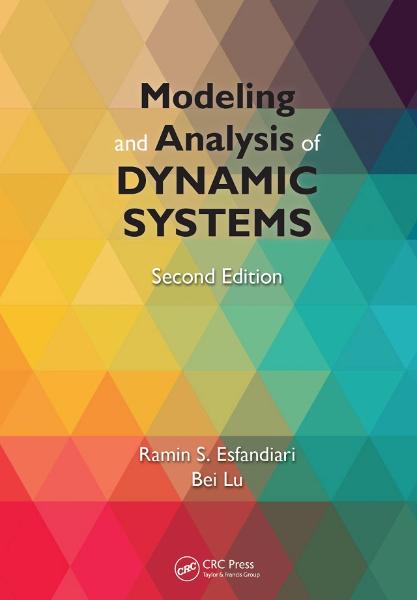
جهت دانلود کتاب مدلسازی و تحلیل سیستم های دینامیکی(Modeling and Analysis of Dynamic Systems)، به لینک زیر مراجعه نمایید:
کتاب مدلسازی و تحلیل سیستم های دینامیکی

 آموزش کتیا، طراحی و مدلسازی رینگ چرخ خودرو (Wheel Rims) در نرم افزار CATIA
 کتاب مدلسازی فضایی با نرم افزار سالیدورکس و ان ایکس
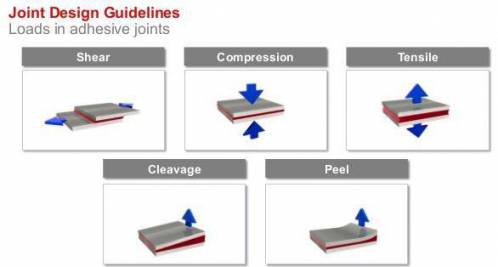 دانلود پروژه بهینه سازی اتصالات چسبی در کامپوزیت ها
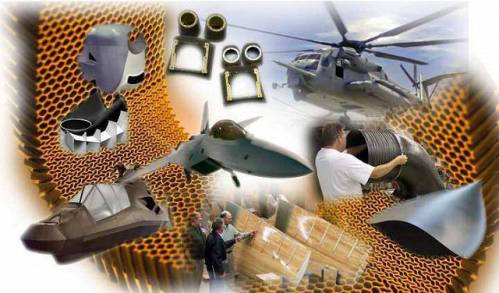 کامپوزیت هاي زمینه پلیمري
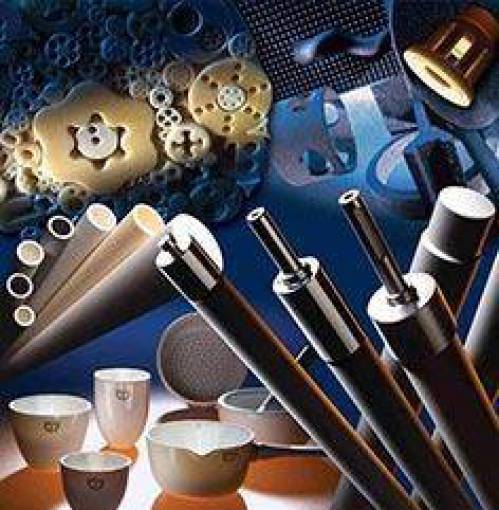 بررسی سرامیک ها و اهمیت اتصال در آنها
 آموزش مدلسازی، مونتاژ، ورقکاری، نقشه کشی، شبیه سازی نرم افزار اتودسک اینونتور
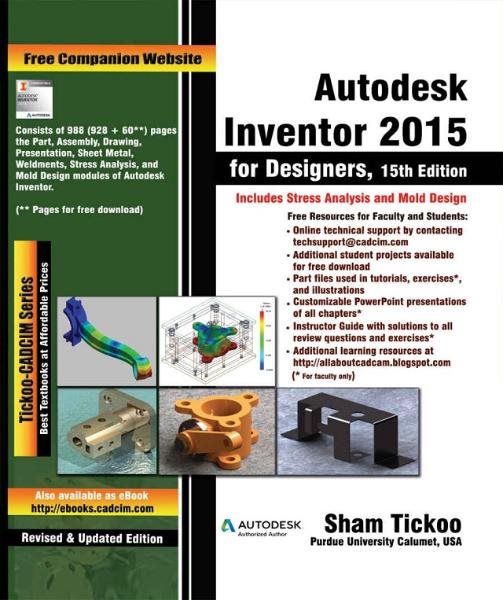 آموزش مقدماتی تا پیشرفته نرم افزار اتودسک اینونتور
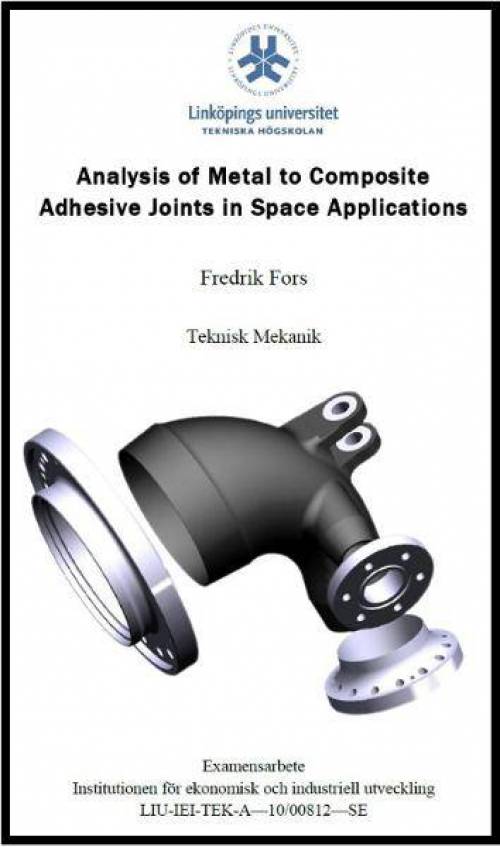 تحلیل اتصالات چسبی فلز به کامپوزیت در کاربردهای فضایی
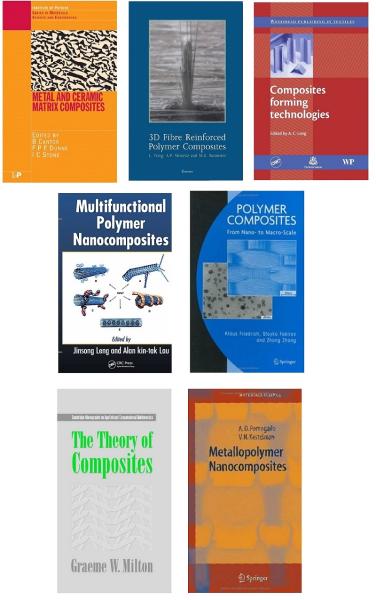 دانلود 7 کتاب مرجع آموزش کامپوزیت ها
 سیستم های کنترل خطی و کنترل مدرن به همراه حل تمرین
 دانلود نمونه سوالات امتحانی و تمرینات حل شده درس مکانیک محیط های پیوسته
 جزوه آموزش جامع آنالیز مودال پروفسور سعید ضیائی راد
 جزوه مبانی سیستم انتقال قدرت در خودروهای سواری
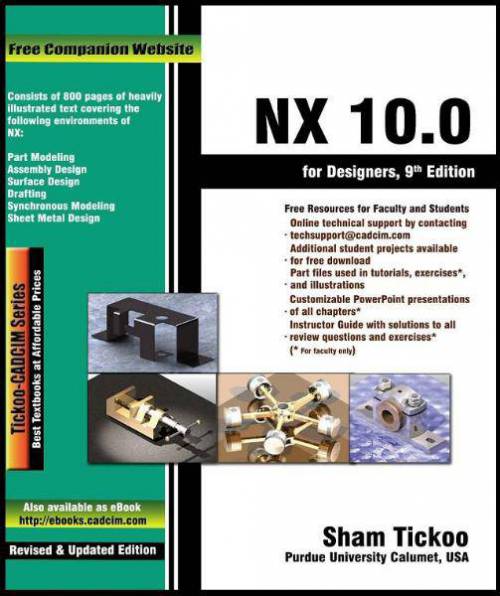 کتاب آموزش مقدماتی تا پیشرفته نرم افزار ان ایکس
 مکانیک محیط های پیوسته برای مهندسین به همراه تشریح کامل مسائل
 دانلود کتاب آموزشی و مجموعه کدهای تخمین حالت و پارامتر با فیلتر کالمن
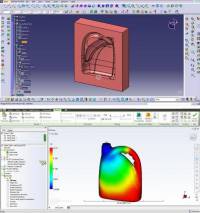 طراحی قالب بادی بطری روغن موتور با CATIA و تحلیل آن با نرم افزار MoldFlow
 مقدمه ای بر مکانیک محیط های پیوسته به همراه تشریح کامل مسائل
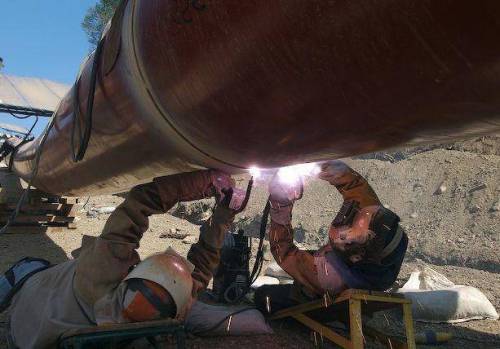 مجموعه آموزش جامع (جوش، بازرسی، عیوب، دستورالعمل) لوله های انتقال نفت و گاز
 تعیین فراوانی موارد استفاده از ECT در بیماران بستری در بیمارستان
 راهنمای جامع چیلرها
 نظام آراستگی محیط کار
 نرم افزار حل معادلات مهندسی (Engineering Equations Solver)
 طراحی سیستم های انتقال
 طراحی سیستم تعویض دنده اتوماتیک دوچرخه
 آموزش نرم افزار سالیدورکس
 تشریح کامل مسائل مکانیک محیط های پیوسته برای مهندسان